The effectiveness of road roller compaction hinges on three critical elements: soil properties, equipment configuration, and operational techniques. This guide provides actionable insights to maximize pavement quality and durability.
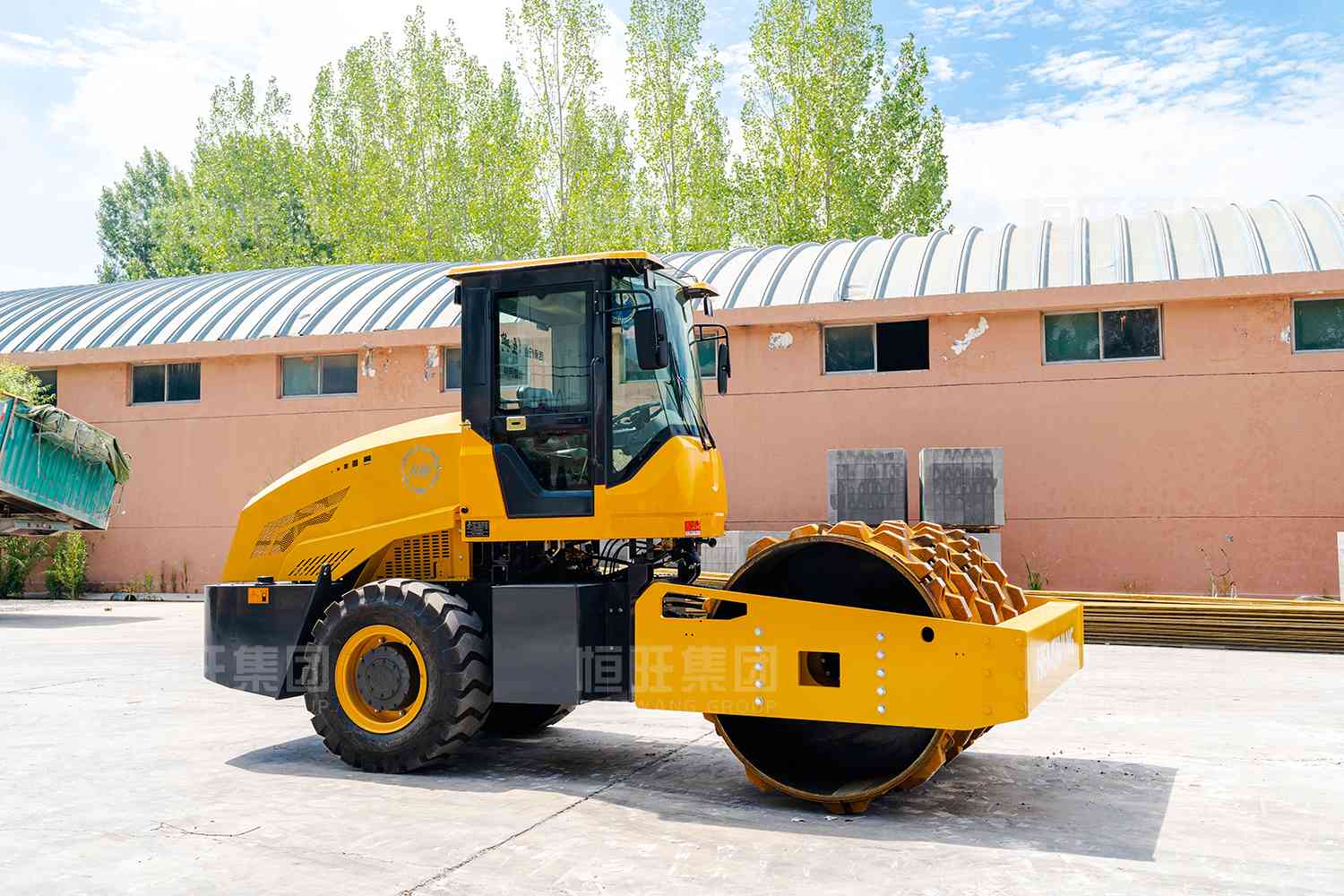
1. Soil Compatibility and Road Roller Selection
Different soil types demand tailored road roller usage:
Cohesive Soils (Clay): High-frequency vibratory road rollers disrupt interparticle bonds through intense vibration. Use layered compaction (≤25 cm per lift) with 8–10 passes to achieve optimal density.
Granular Soils (Sand): Static or low-frequency vibratory road rollers leverage particle rearrangement. Combine static passes (1–2) with rubber-tired rollers (2–3) for smooth finishes.
Silty Soils: Hybrid workflows—vibratory compaction for base layers followed by rubber-tired finishing—achieve CBR values exceeding 8.
2. Road Roller Parameter Optimization
Equipment Types:
Heavy Vibratory Rollers: Penetrate deep layers (50+ cm) for roadbed stabilization.
Rubber-Tired Rollers: Ideal for asphalt surface sealing, enhancing texture and preventing rutting.
Padfoot Rollers: Excel in cohesive soils, applying lateral pressure for uniform compaction.
Critical Adjustments:
Vibration Modes: High-frequency (45–50 Hz) for clay, low-frequency (25–30 Hz) for sand.
Speed Control: 2.5–3 km/h for clay, 4–5 km/h for sand to balance efficiency and depth.
Lift Thickness: ≤25 cm (clay), ≤30 cm (sand), ≤20 cm (silt).
3. Operational Best Practices
Compaction Sequence:
Begin at edges, progressing inward to prevent edge displacement.
Maintain 30–50% overlap between passes for consistent coverage.
Environmental Adaptations:
High-Moisture Clay: Stabilize with 3–5% lime additives.
Rain-Affected Sand: Postpone compaction until moisture drops below 8%.
Silty Subgrades: Apply targeted compaction in critical zones.
Quality Checks:
Monitor moisture levels hourly using portable sensors.
Conduct nuclear density tests post-compaction (ASTM D6938 compliance).
4. Maintenance and Troubleshooting
Daily Inspections: Verify drum balance, vibration system integrity, and tire pressure.
Performance Tweaks:
Adjust spray nozzles to prevent dust (clay) or over-saturation (sand).
Calibrate amplitude settings for specific materials (0.3–0.8 mm optimal range).
Edge Handling: Complete turns outside compacted zones to avoid surface damage.
Implementation Strategy:
Conduct a 30-meter trial section for each soil type to validate parameters.
Train operators on vibration timing (activate during mid-speed, deactivate before stopping).
Schedule biweekly maintenance to address wear in drum bearings and vibration components.
By aligning road roller selection with soil characteristics, fine-tuning operational parameters, and adhering to rigorous quality checks, contractors can achieve 95%+ compaction compliance while reducing fuel consumption by 20–30%.
If you have any other questions, please call us or leave us a message!